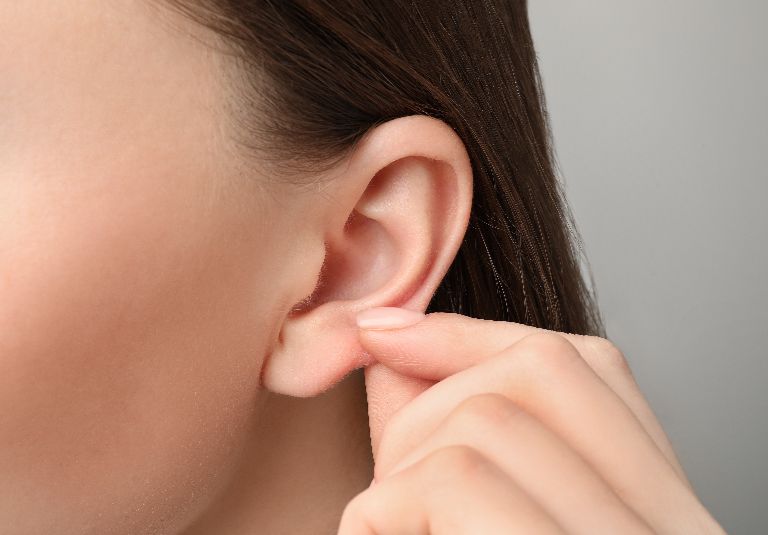
While we often focus on the central features of the face, such as the eyes, nose, or jawline, the earlobes play a surprisingly critical role in facial symmetry and frame the lower face. When an earlobe is torn, tunnelled and stretched, or misshapen, it can instantly draw unwanted attention, limit your choice of jewellery and leave you feeling self-conscious.
As a plastic surgeon, Mr Mathur frequently meet patients who have spent months or years hiding their ears behind long hair or styling habits. The good news is that earlobe deformities—whether caused by a sudden accident, years of wearing heavy earrings, or natural aging—are easily treatable.
Earlobe reconstruction is a straightforward, in-clinic procedure that can beautifully restore a natural, balanced contour to your ears. Let’s look at the science behind why these deformities happen and exactly how we repair them.
Why Earlobe Deformities Happen: The Underlying Causes
The human earlobe (or lobule) is unique because, unlike the rest of the ear, it contains no rigid cartilage. It is made up entirely of delicate skin, blood vessels, and soft fatty tissue. This makes it incredibly soft and pliable, but it also means it lacks structural support and is highly susceptible to gravity, trauma, and stretching.
We generally categorize earlobe deformities into three distinct types:
- Elongation and Thinning (The Gravity Effect)
Decades of wearing heavy statement earrings or large hoops gradually pull down on the delicate tissue of the lobule. Over time, the structural collagen breaks down, causing the original small piercing hole to stretch out into a long, vertical slit. In severe cases, the earlobe itself stretches out, losing its youthful, plump volume and looking unnaturally long or deflated.
- Acute or Gradual Tears
- Acute Tears: This happens in a split second. A child pulls on an earring, a brush catches a hoop, or an earring gets snagged on a sweater, violently ripping the jewellery completely through the bottom of the lobe.
- Gradual Tears (A Cleft Lobe): This occurs when heavy earrings slowly wear through the bottom edge of the earlobe over several years. The piercing hole stretches lower and lower until the tissue finally splits into two separate halves, creating what surgeons call a cleft earlobe.
- Gauged Earlobe Deformities
The deliberate stretching of earlobes using progressively larger plugs or “gauges” creates a unique challenge. Once an earlobe has been stretched past a certain diameter (typically around 8mm to 10mm, known as the “point of no return”), the tissue loses its natural elasticity. It can no longer shrink back on its own, leaving behind a permanently sagging, hollow loop of skin if the plug is removed.
How It’s Repaired: The Surgical Process
Many patients delay seeking help because they assume repairing an earlobe involves complex, painful surgery in a hospital operating room. In reality, earlobe reconstruction is a highly precise, minor surgical procedure performed right here in our clinic room under local anaesthesia. It typically takes less than 30 minutes per ear.
Simply stitching the two split edges of a torn earlobe back together does not work. If a surgeon just sews the edges together, the natural pulling force of healing tissue will eventually create a tiny, notched indentation at the bottom edge of the earlobe, making it look unnatural.
Instead, we use advanced plastic surgery techniques to rearrange the tissue for a completely smooth, continuous edge.
1.Numbing and Preparation:5 mins.
A tiny needle is used to apply a local anaesthetic directly to the earlobe. Within minutes, the entire area is completely numb. You will remain awake and comfortable, feeling only light pressure during the procedure.
2.Excision of Scar Tissue:10 mins.
The skin inside a torn or stretched hole has already healed and formed a layer of smooth scar tissue. To get the two sides to fuse back together, the surgeon must gently remove a microscopic ribbon of this old skin, creating fresh edges that are biologically ready to heal.
3.Flap Rearrangement (The Advanced Technique):15 mins.
Rather than sewing a straight line, we often use specialized plastic surgery techniques, such as a Z-Plasty or a triangular flap repair. By interlocking the healthy skin edges like puzzle pieces, we break up the scar line. This redistributes the physical tension forces, preventing a notched look and ensuring a perfectly round, smooth bottom rim.
4.Fine Suture Closure:10 mins.
We use microscopic, hair-thin sutures to meticulously stitch the skin back together on both the front and back of the earlobe. This ensures the edges line up perfectly, down to the millimeter, minimizing visible scarring.
Recovery, Healing, and Repiercing
The recovery following an earlobe repair is incredibly straightforward, allowing you to return to work or your normal daily activities immediately.
- The First Week: You will have a tiny piece of surgical tape or ointment over the stitches. The area might feel slightly tender or ache mildly for the first 24 hours, which is easily managed with over-the-counter pain relief. You can shower normally after the first day.
- Suture Removal: Your stitches will be gently removed in our office 7 to 10 days after the procedure. The incision line will initially look like a thin pink line, but it will gradually fade to a faint, near-invisible white line over the following months.
- When Can You Repierce? You can wear earrings again! However, we must allow the internal collagen structure to mature and regain its strength. You must wait a minimum of 3 months before repiercing your ears. When you do get them repierced, we ensure the new hole is placed slightly to the side of the surgical scar, as scar tissue is weaker and more prone to tearing again.
Reclaim Your Confidence
Your face is your calling card to the world, and every detail matters. If you have been hiding a torn, stretched, or gauged earlobe, you don’t have to live with it. Earlobe reconstruction offers a safe, predictable, and elegant solution to restore your ears to their natural state.
Back to blog